As we enter into Autumn, many of us are looking forward to a return to cooler times, especially those of us from Southern California. The markets handled numerous uncertainties during Summer: rising interest rates, midterm election noise, geopolitical uncertainty, high oil prices, and the potential impact of a historically unprecedented El Niño. However, policy is supportive, and the fundamental backdrop for both earnings and the economy is strong.
Focus on the Fundamentals
The earnings outlook remains positive, both in the U.S. and across the world. 2026 is estimated to be the third consecutive year of double-digit earnings growth, an achievement not seen in 20 years. In addition, analysts expect yet another year of double-digit earnings growth in 2027.
While earnings growth in the U.S. is nothing new, Europe is showing its strongest earnings growth in three years while emerging markets are projected to grow profits by nearly 50%. Economic growth in the U.S. is outpacing other developed nations, and America boasts a resilient job market running at near full employment.
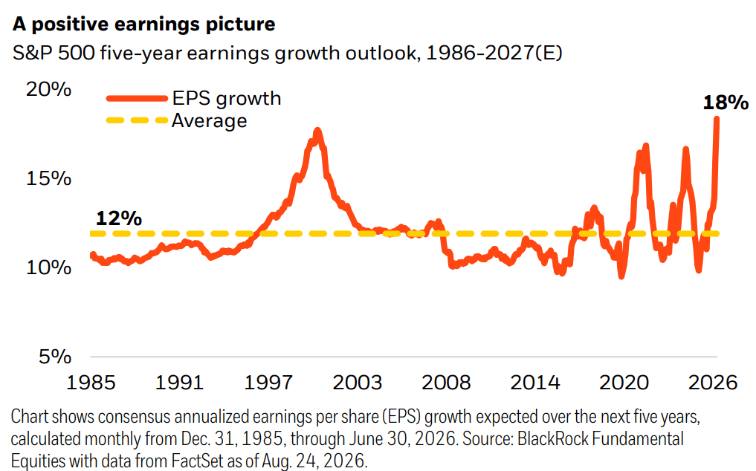
Artificial Intelligence (AI) remains the dominant driver of this earnings growth. Both corporations and governments continue to finance investments into data center infrastructure, investments intended to increase the supply of “compute”.
Compute is the raw processing power, hardware resources, and infrastructure needed to run calculations and execute AI workloads. In a recent innovation, companies can now borrow and trade compute on an exchange.
The rapid expansion of artificial intelligence has turned A.I. compute into a standardized, tradable financial commodity—frequently described by Wall Street as “the new oil.” Instead of buying massive quantities of graphics processing units (GPUs) upfront with cash, major tech companies and AI startups are heavily leveraging debt to lease or secure computing power.
Will Higher Rates Cause a Recession?
The stock market is presently near all-time highs despite the rapid spike in interest rates – while higher rates can restrain economic activity and stock valuations, rising corporate earnings can overwhelm this effect.
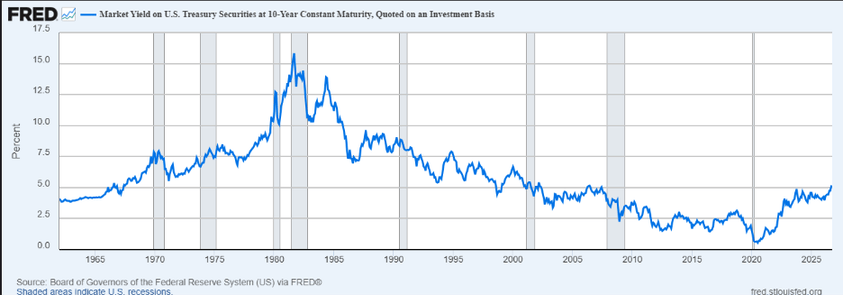
In September, the Federal Reserve raised interest rates by 0.25%, the 1st rate increase since July 2023. While rates are high relative to recent history, they are still close to their long-term average of 4.26%.
What are the Negative Effects of Higher Interest Rates?
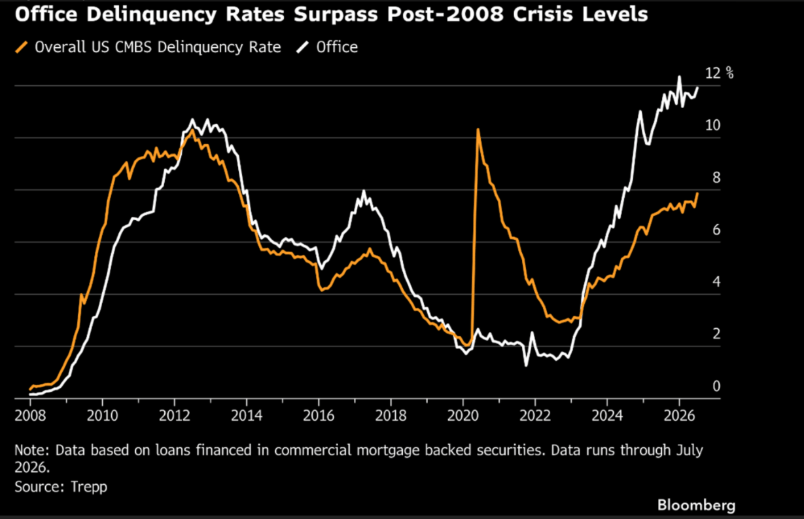
Commercial real estate is one of the most interest rate sensitive industries. The market itself is massive, with more than $5 trillion in commercial and multifamily real-estate mortgages outstanding. Pressured by higher rates, default rates on debt tied to real estate have risen to the highest levels since the 2008 financial crisis.
Why Bonds Are Attractive
We believe elevated risk-free rates (the return investors can earn on very low-risk government debt, such as U.S. Treasuries) and real yields (the return on these investments after accounting for inflation) provide an attractive starting point for fixed income returns. U.S. treasuries maturing in 10 years now offer a yield of over 5.3%, the highest since 2002. Municipal bonds are offering high tax equivalent yields above 8.5% for those in the highest tax brackets.
Mid-Term Elections
While midterms may seem chaotic, the stock market has performed well during these elections since World War 2. Stocks also tend to perform well in general during the fourth quarter.
Prediction markets show a 90% chance that Democrats will take the House and a 60% chance of taking the Senate – this would be typical, as the incumbent President’s party typically loses seats.
Where are the opportunities?
We see attractive opportunities beyond AI, particularly stocks in countries pursuing pro-business policies. We also see opportunity in high-quality fixed income. Global equities have shown resilience this year, but market leadership remains concentrated, with the ten largest companies making up an astonishing 37% of the S&P
500 Index.
We favor higher-quality companies, large-caps, and dividend payers over more rate-sensitive industries. We like companies with low borrowing costs and pricing power. We also see opportunity in Europe and Japan, which have delivered strong performance even without the notable A.I. capex impulse seen in the U.S.
While many people think higher rates are negative for stocks, historically speaking the 1-year returns for stocks and bonds have tended to be positive following the start of seven Fed rate hiking cycles from 1983 to
2022.
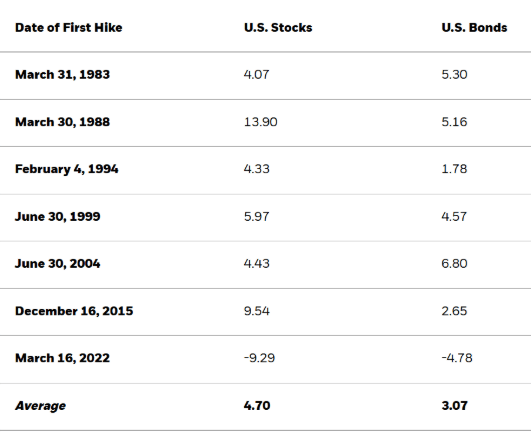
Source: BlackRock, Morningstar. U.S. Stocks represented by the S&P 500 PR index, and U.S. bonds by the Bloomberg U.S. Bond Aggregate Index.
Big Picture
As rates have risen across the world, we expect volatility to remain elevated. Vulnerable nations like France are facing the most severe issues. However, if earnings continue to shine, we believe that markets can successfully adapt to higher rates, energy prices, and deficits alongside an immense need for capital in the private sector. We are looking for a broadening of earnings beyond the Magnificent 7 into a wider range of companies and sectors. Our focus remains on businesses with pricing power, strong operational momentum, improving profitability, and sustainable earnings growth.
This document is for informational purposes only and should not be relied upon as investment advice. This material is intended only to facilitate your discussion with Strategy Asset Managers (“SAM”) as to the opportunities available to our clients and is not intended to be used as a general guide to investing, or as a source of any specific recommendation, and makes no implied or expressed recommendations concerning the manner in which clients’ accounts should or would be handled, as appropriate strategies depend on the client’s specific objectives. The information contained in this document is superseded by, and is qualified in its entirety by, such offering materials. This material is based upon information which we consider to be reliable, but we do not represent that such information is accurate or complete, and it should not be relied upon as such. Any historical information is as of the date stated. Any statements regarding future events constitute only subjective views or beliefs, are not guarantees or projections of performance, should not be relied on, are subject to change due to a variety of factors, including fluctuating market conditions, and involve inherent risks and uncertainties, both general and specific, many of which cannot be predicted or quantified and are beyond our control. Past performance is not indicative of future returns. Future results could differ materially and no assurance is given that these statements are now or will prove to be accurate or complete in any way. Do not rely on any opinions, predictions, projections or forward-looking statements contained herein. Certain information contained in this document constitutes “forward-looking statements” that are inherently unreliable and actual events or results may differ materially from those reflected or contemplated herein. SAM does not make any assurance as to the accuracy of those predictions or forward-looking statements. SAM expressly disclaims any obligation or undertaking to update or revise any such forward-looking statements. The views and opinions expressed herein are those of SAM as of the date hereof and are subject to change based on prevailing market and economic conditions and will not be updated or supplemented. This document is not intended for general distribution and it may not be copied, quoted or referenced without SAM’s prior written consent.